
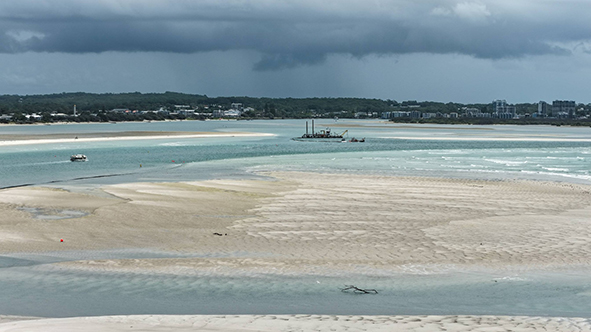
Pumicestone Passage has seen decades of management strategies, but have they delivered real change? It may be time to turn good intentions into meaningful action.
One of the early requirements for the Sunshine Coast Waterways Authority (SCWA) is to create an Integrated Management Strategy. An extract from the Bribie Review suggests this:
“This area deserves a single, coordinated, consultative and comprehensive management plan; other areas may as well. Current arrangements could be coordinated to support a shift towards proactive management. A partnered approach is recommended as it is consistent with an agile and iterative strategy that prioritises near-term action.”
The SCWA requirement is for the creation of an Integrated Management Strategy, whereas the Bribie Review identifies the need for a plan. What is the difference between a plan and a strategy? Do we need a masterplan for our waterways, or is a strategy sufficient?
These terms, plan and strategy, are often used interchangeably, but they serve different purposes and play unique roles in reaching goals. A plan and a strategy are not the same thing, and understanding the differences is crucial to effective decision-making.
A strategy is your long-term vision. It answers the big questions, like “what” you want to achieve and “why” it matters. Essentially, a strategy provides a roadmap, guiding the direction and making sure that efforts and resources are aligned with the desired outcomes.
A plan is a detailed outline of the steps you need to take to achieve a specific goal. It breaks down your strategy into actionable tasks, specifying what needs to be done, how it will be done and when it should be completed. A plan is essential for translating your strategy into action.
Pumicestone Passage is a classic example of a location in need of a masterplan. In 1993, the government of the day created an Integrated Management Strategy, which has never been implemented as a plan. In 1999, a community group, Pumicestone Regional Catchment Co-ordination Association (PRCCA), created a similar management strategy, which gained little, if any, traction towards management of the passage. Without a plan, management by the current government and non-government bodies is mainly reactive rather than proactive and is constrained by numerous legislative requirements.
In my working days, I used a simple mnemonic to help me with analysis and planning. It simply read: “I had six honest serving men; they taught me all I knew. Their names were What and Where and When and How and Why and Who.” This seems a simple and practical system for designing the management plan needed to effectively manage the waterways into the future. Frequently, action plans start with the “who” and lose much of their effectiveness as a result.
Management of the passage would be complex enough on its own, but when combined with the mix of environmental and commercial needs of the other waterways managed by the SCWA, a complete and thorough understanding of the catchments and their direct impacts on the waterways is necessary.