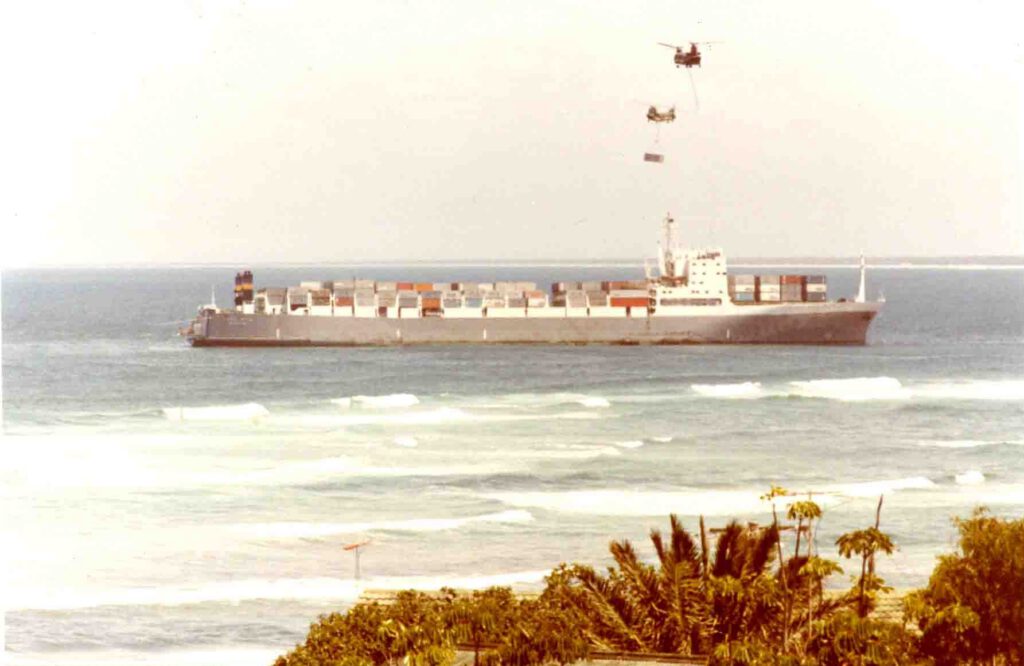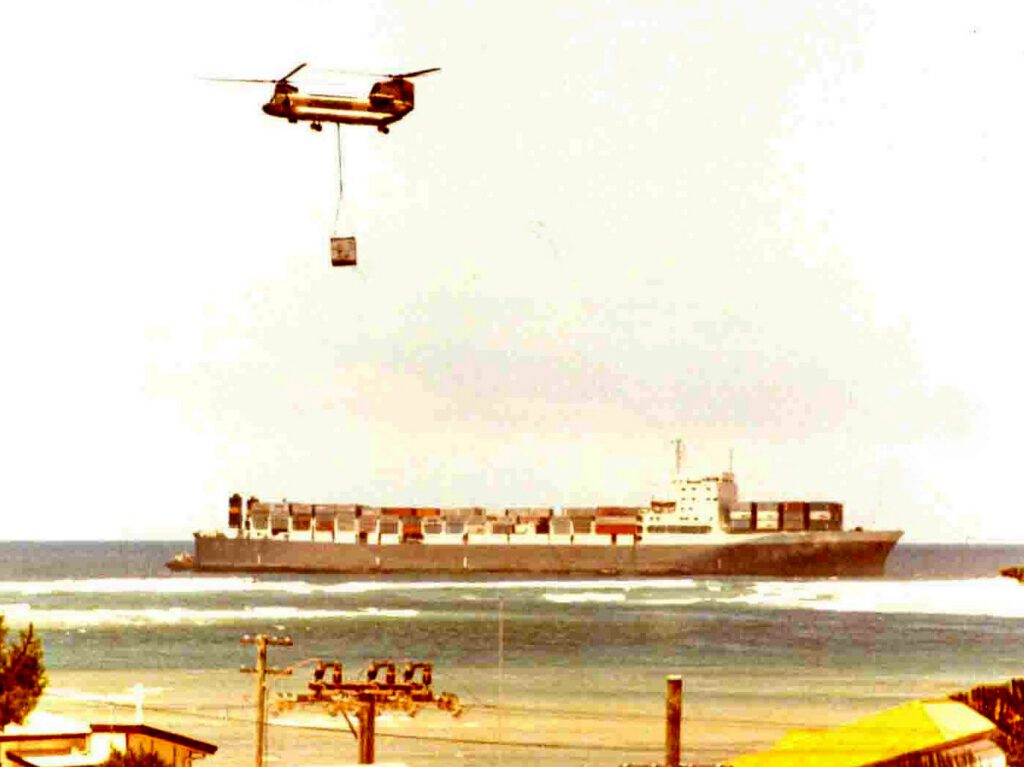
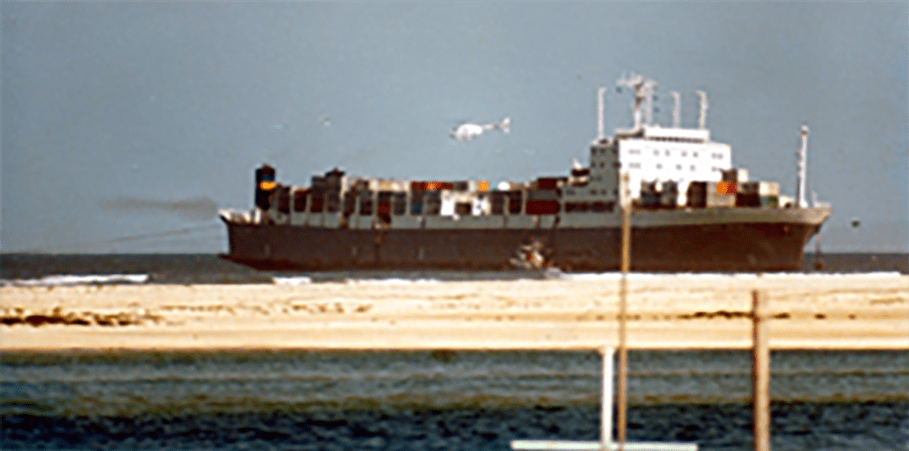
In 1981, a fully loaded 13,500-tonne container vessel from Malaya ran aground on the northern tip of Bribie Island near the entrance to the Pumicestone Passage at 7:20pm.
At the time, Coast Guard officials reported, “She is stuck fast but in no danger of breaking up in the calm seas.“ The vessel had been preparing to enter the North West Shipping Channel when it struck the sandbank at full speed.
The ship’s captain requested a tug at high tide to assist in refloating the vessel, but the attempt was unsuccessful. From the shore, it appeared to be positioned directly across the then-bar at Pumicestone Passage near Bulcock Beach.
For two weeks, the stranded vessel became both a media sensation and a major tourist attraction, causing persistent traffic congestion at Happy Valley.
The ship sustained damage to seven ballast and oil tanks, raising concerns about its stability if and when it could be freed from the coffee rock and sandbank.
Lloyd Clark, an experienced mariner who had rescued numerous boats from Caloundra Bar and skippered the survey vessel when the North West Shipping Channel was being marked, stated, “It appears the Anro Asia passed the number one red buoy and failed to execute the required 80-degree turn.“ Official reports attributed the incident to pilot error.
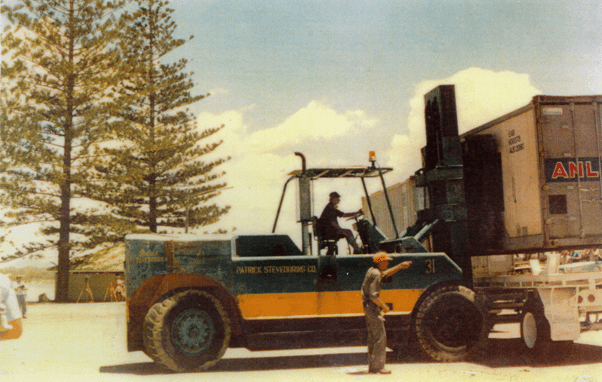
Multiple refloating attempts failed, leading authorities to offload all 80 shipping containers onto the sand at Happy Valley. Chinook helicopters were deployed to complete the task, with a convoy of semi-trailers standing by to transport the cargo to Brisbane.
During the vessel’s two-week stranding, thousands of spectators gathered along the shoreline, equipped with binoculars, cameras, and refreshments to witness the unfolding efforts.
At one point, when hopes of refloating the ship seemed slim, there were proposals to repurpose the ship as a floating tourist hotel.
By historians Anne Wensley and John and Janice Groves