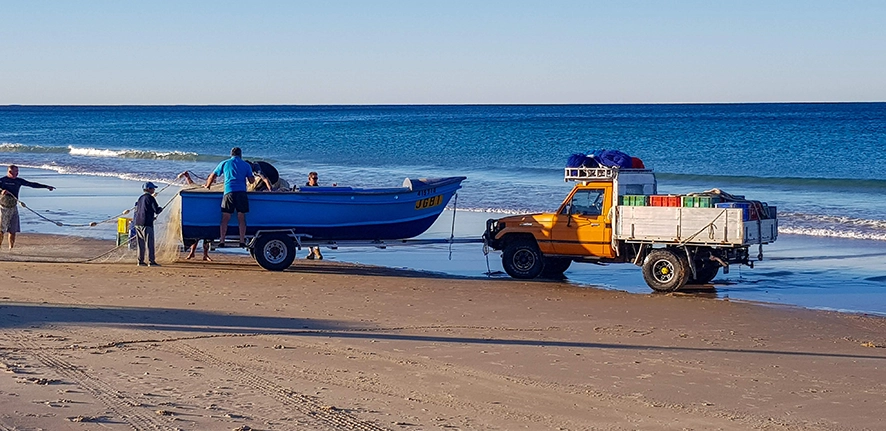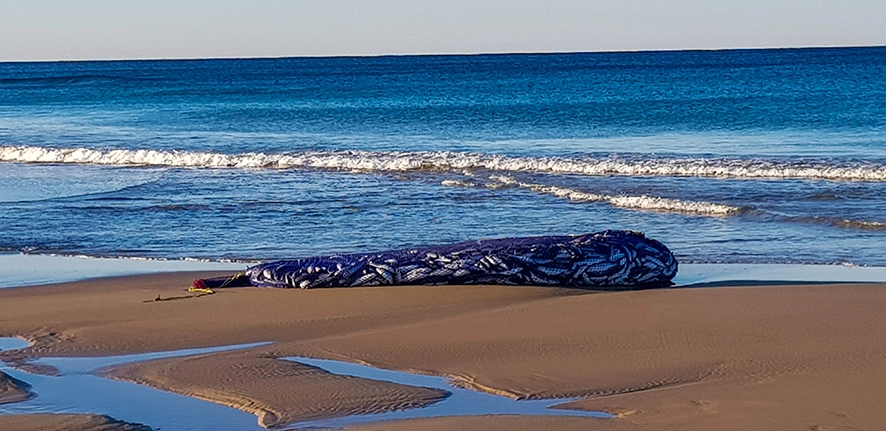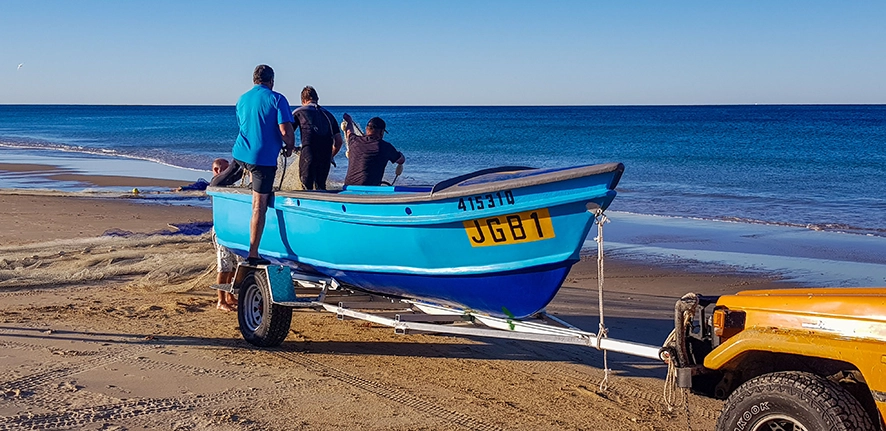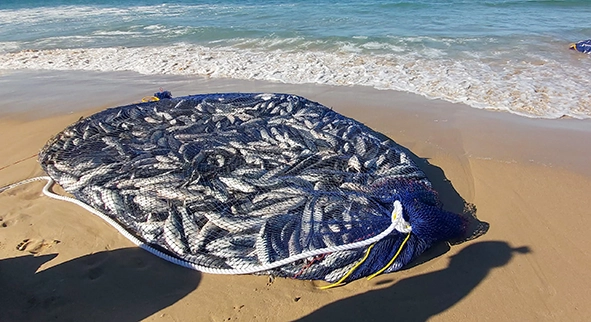
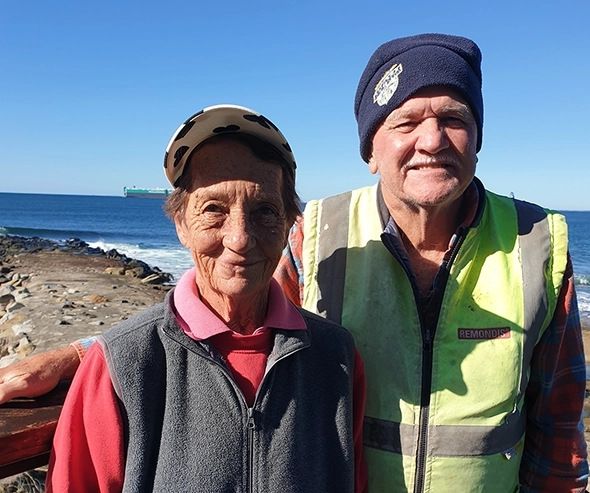
As generations of fishermen gather at Kings Beach for the annual mullet season, the community honours Raymond “Boysa” Chaplin while carrying forward a century-old coastal tradition.
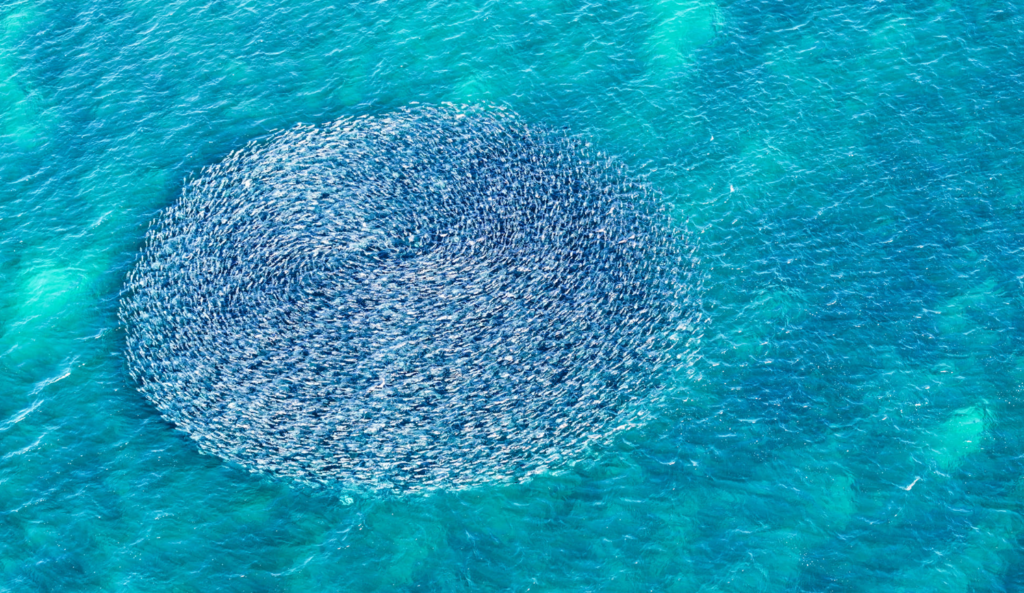
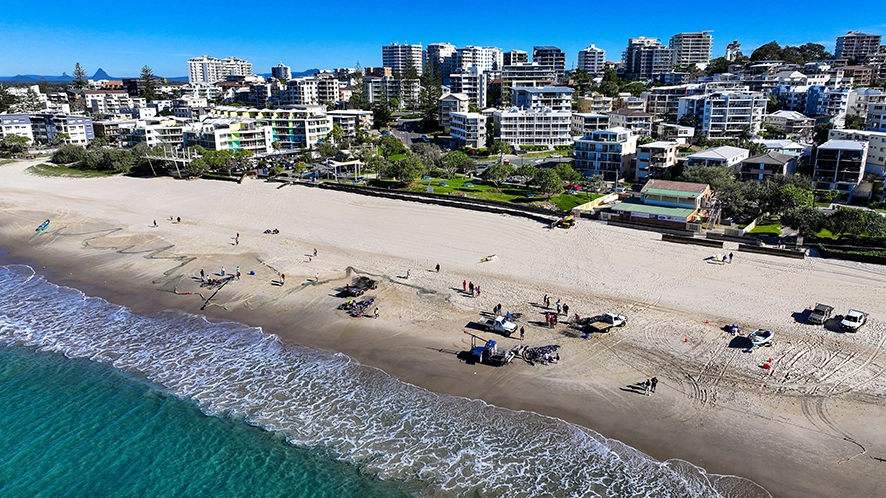
On winter mornings at Kings Beach, there is a ritual nearly as old as Caloundra itself. As westerly winds sweep across the coastline and migrating mullet begin their journey north, fishermen gather with boats, nets and decades of knowledge, watching the sea for the flick of a tail or the dark shadow of a passing school of mullet.
For more than a century, the annual mullet run has been a defining feature of life on Caloundra’s coastline, connecting generations through one of the town’s oldest traditions.
This year, the mullet season carries added meaning as the community remembers Raymond “Boysa” Chaplin, whose passing leaves a significant void among the Kings Beach mullet crew, even as his knowledge and legacy continue to guide those following in his footsteps.
Described by some as a hard taskmaster, Boysa brought a firm but fair approach to mullet fishing, no doubt in part due to both the dangers of the ocean and the skill required to successfully land a haul.
As wife Heather recalls, “If you didn’t listen and do what you were told, you were in trouble. But if you wanted to learn, then he was happy to share his knowledge.”
Today, Grant Donaldson and Todd Rew operate the Kings Beach mullet fishery under the licence once held by Boysa and Heather. While the tradition continues, Boysa’s absence has been keenly felt by the crew.
“Boysa was a character, a very hard man but a fair man. If you weren’t doing something right, he’d tell you. But the guidance that he’s given to me over the years, well, I’m really missing that now. It’d be awesome if he were still here today to teach me more, but he’s up there in heaven now, with the fish, looking over us and hoping that we do alright this season,” said Grant.
“But I know that if I do something wrong, something will come out of somewhere and give me a good clip in the ear,” he added with a laugh.
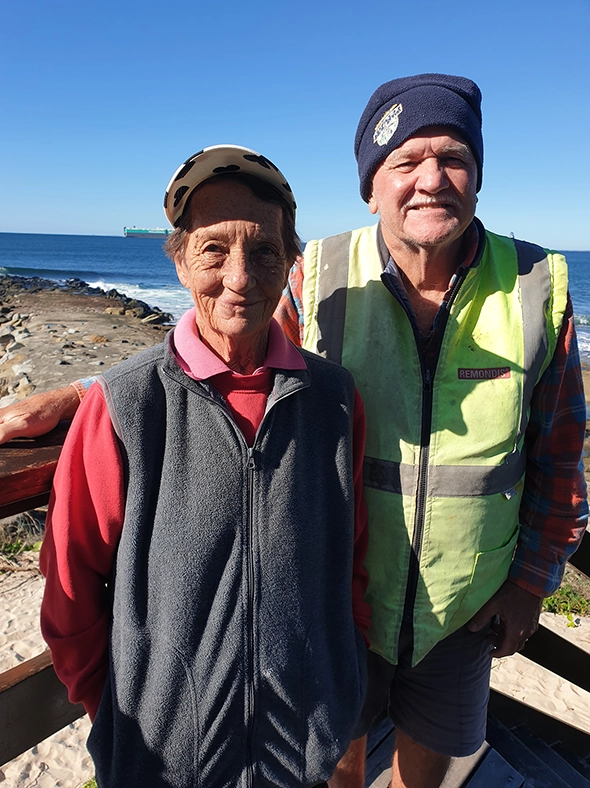
While Boysa may no longer be on the beach, his presence lives on through his family. Heather, his son Adam, and cousin Mark now serve as mullet spotters for Grant and Todd’s crew, continuing their lifelong connection to the annual run.
“We’re down here this season out of the goodness of our hearts, but it’s really because we just love it,” said Heather.
“Yeah, when the westerly winds start blowing, we find our way down to the beach,” added Mark.
The Caloundra mullet zone extends from the bar near the Pumicestone Passage to Point Cartwright, with neighbouring zones stretching north from Point Cartwright to Sunshine Beach and from Sunshine Beach to K’gari (Fraser Island).
The waters off Caloundra have long been fished by the Chaplin and Clarke families, whose crews once competed to get the best ‘shot’ or ‘haul’ before the coastline was later divided into designated fishing zones.
Mark, who originally worked with the Clarke crew before joining Boysa and the Chaplins, remembers those days well.
“We did have what we called the mullet wars back in the day. We’d try to beat the other crew to get the best shot and they’d do the same to us. This was before zoning came in.”
“The rule back then was that you could stay on the beach and wait for the shot for six hours and if you didn’t catch any fish in that time, well, you’d have to pull out and let the other crew sit it out for the next six hours.”
Eventually, cooperation prevailed.
“Then we came to an agreement. We realised that we were both losing more fish than we were getting. It was much easier to work together than to work apart, so we shared the area and it worked well,” said Mark.
Despite multiple crews working the coastline during mullet season each year, the mullet fishery industry remains highly sustainable, not just because every part of the fish is used, but also due to the ongoing regeneration of the species.
Female mullet, which can carry more than two million roe, spawn repeatedly as they travel north along the coast during winter.
“We see the mullet spawning all the way up the coast. They don’t just spawn once, they spawn dozens and dozens of times. So, what we fish each year is only a small percentage of the mullet that are out there,” said Grant.
“Some people think that we’re down here taking every single fish, but there are millions that swim past and keep doing their thing.”
Looking towards the future, Grant hopes the Kings Beach mullet fishery can continue for generations to come, supported by the experience of Heather and Mark and the wisdom passed down by Boysa.
“I’m always going to be here at mullet time. I’m a fisherman. It’s what I do and I love it. I’ve got two young boys and they love it as well. If they weren’t at school right now, they’d be down here working too.”
“Hopefully, if Todd and I keep bringing in big hauls each year, we can continue doing what we love for years to come.”
Mullet fishing season runs from June through August.
Images: Bluey’s Photography, Alana Hall, Chaplin family