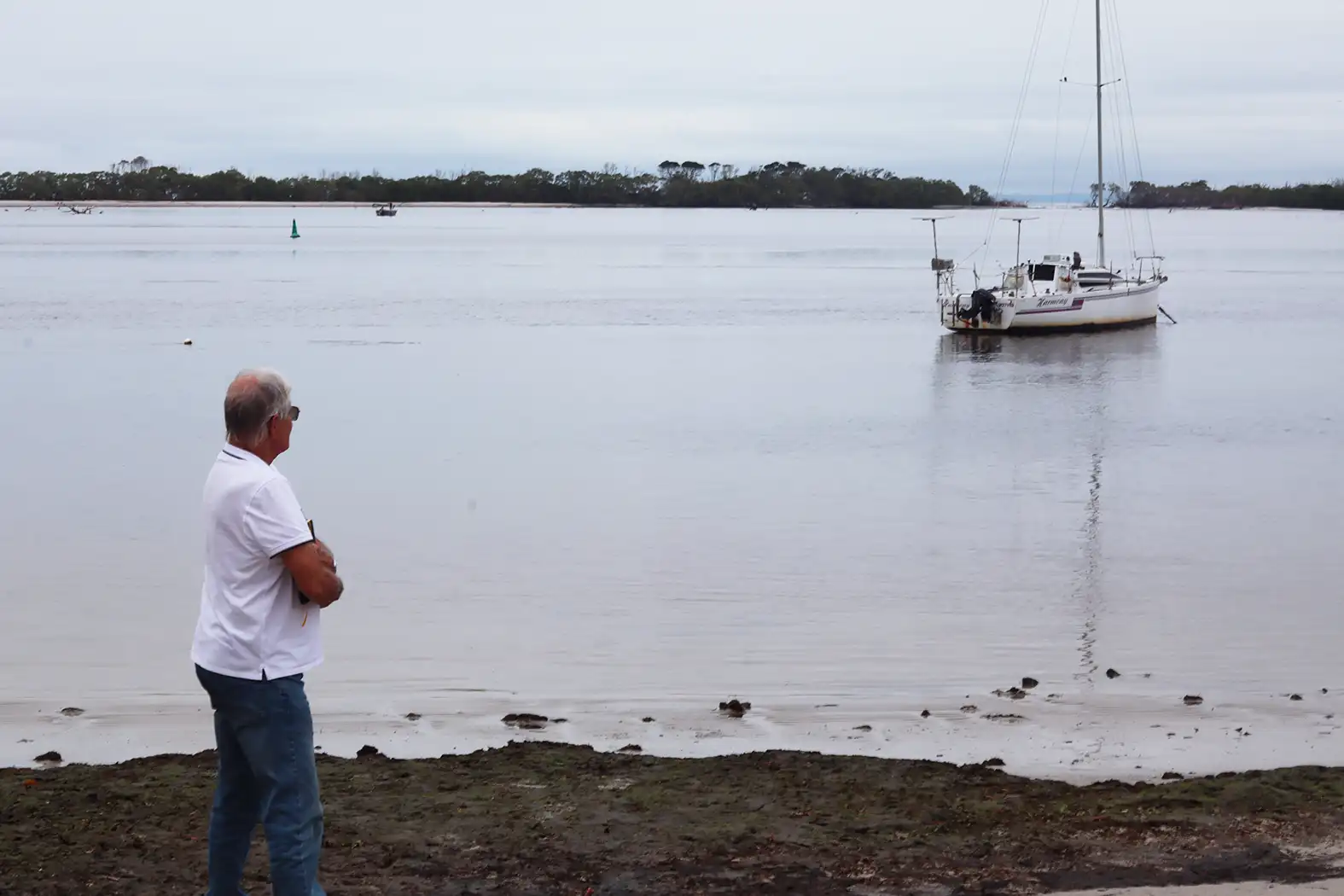
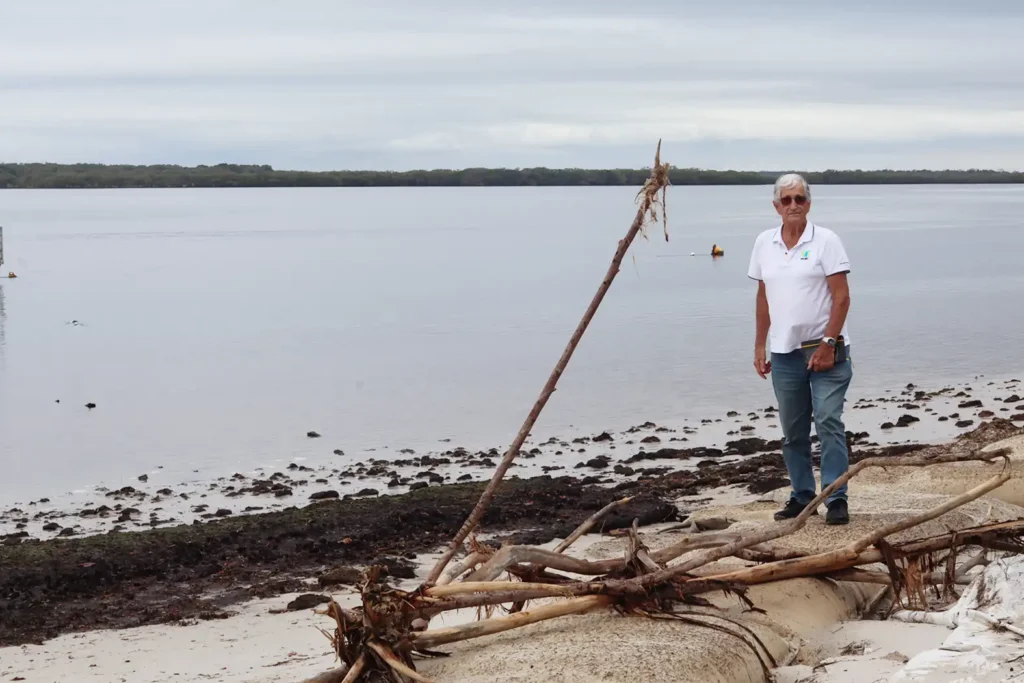
Overlooking the waters of Pumicestone Passage from the Caloundra Power Boat Club, Ken Mewburn sips his cappuccino and speaks with quiet urgency. The longtime Caloundra resident and researcher knows this coastline well—and he’s deeply concerned for its future.
For over a decade, Ken has been a tireless voice for Pumicestone Passage. Now in his mid 80s and planning to retire from community leadership next year, he’s determined to leave behind a plan of action before it’s too late.
Ken’s story begins on his family farm near Dubbo, in New South Wales. I was literally a high school dropout,” he laughs. “I left as soon as I could—had no interest in learning. That came later.”
After working on the farm and finding he didn’t quite fit the mould, Ken turned to aviation. He flew as a charter pilot and instructor before the economy tanked in the 1960s.
“I thought flying was it for me. Then the drought hit. I joined an oil company at Sydney Airport and stayed there for thirty years.”
In 2000, he moved to Caloundra for a slower pace. But a life of beach-bumming wasn’t meant to be.
“I call it penance for a 30-year career in the oil industry.”
Ken threw himself into community causes, first with the Golden Beach Progress Association, then as a founding member of TAPP—Take Action for Pumicestone Passage. Over the years, he’s also held roles in the Caloundra Residents Association, Night Eyes, the Queensland Air Museum, and more. He currently serves as president of both TAPP and the Pumicestone Passage Catchment Management Body Inc. (PPCMB).
In 2011, Ken became deeply concerned about changes to Bribie Island. Conversations with other local advocates—and a growing body of research—revealed the severity of what was unfolding.
“I started to realise the importance of that little block of sand out there. If it disappeared, it was going to be far more alarming than anyone was saying.”
When the northern tip of Bribie Island breached, the tidal system of Pumicestone Passage changed dramatically. The natural bar that once protected the area acted as a kind of filter, softening tidal impacts and supporting a delicate ecosystem. Now, with the island breached, everything has shifted.
The breach has increased the tide by 23 centimetres. Saltwater floods previously freshwater areas. Wetlands are drying. E. coli levels spike after rainfall. Migratory bird habitats are at risk, and the shoreline is eroding fast.
“You won’t have a surf beach. You’ll have a treacherous waterhole. It’s going to take years for the sand to shift—and meanwhile, everything else suffers.”
Ken warns that if left unchecked, the area could transform into an open bay by the end of the century. “The mangroves, the sand dunes, the trees—they won’t just disappear, they’ll become obstacles in a chaotic water zone.”
The implications for infrastructure are serious. Homes and roads were built under the assumption of natural tidal protection. Without it, future storm surges could overwhelm residential areas like Golden Beach and Diamond Head.
While government departments insist the changes are “natural”, Ken disagrees. He argues that restoring the island and bar is not only possible—it’s essential. “You can build islands where there weren’t any. Why can’t we restore one that’s been here for 3,500 years?”
He’s not an engineer, he admits. But he trusts the experts who agree restoration is achievable—and far more cost-effective than long-term mitigation strategies.
“If we fix it now, it will cost less than trying to stabilise the region against storm surges and rising tides in the future.”
Ken believes that with the right investment, the area can be brought back to its natural state—tidally balanced, ecologically diverse, and recreationally safe.
“We can return our habitat for migratory birds. We can keep the passage clean. We can get our beaches and stormwater systems working the way they’re meant to.”
With retirement on the horizon, Ken is focused on ensuring the community and decision makers understand what’s at stake. “This place was pristine. It was unique. And it still can be.”